Quartzite vs Quartz Countertops: The Complete Comparison (2026)
One comes from a quarry. One comes from a factory. Both make stunning countertops, but they perform very differently in a real kitchen. This independent guide covers cost, durability, maintenance, appearance, and every practical difference a homeowner needs to know.
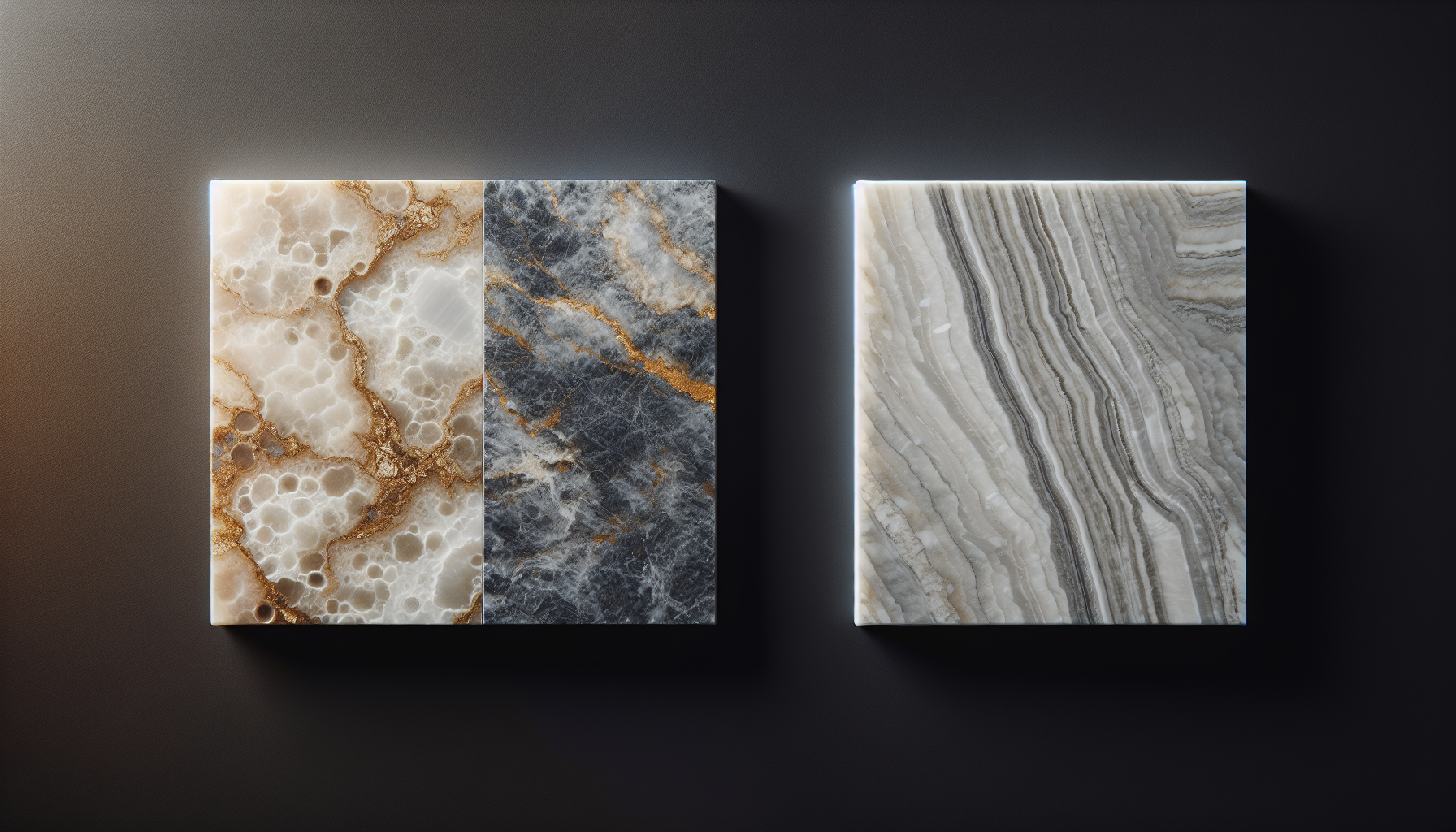
Left: natural quartzite with organic veining. Right: engineered quartz with manufactured uniformity.
At a Glance
Every countertop decision involves trade-offs. Here is the honest summary.
Quartzite
- + Handles hot pans directly (1,000F+)
- + Unique, natural veining: like art
- + UV-stable (suitable for outdoor use)
- + Effective lifetime if maintained
- + Strong luxury resale appeal
- - Annual sealing required
- - Higher upfront cost
- - Limited colour range
- - Must view slab in person
Quartz
- + Zero maintenance: no sealing ever
- + Non-porous, stain-resistant surface
- + Uniform colour matches samples exactly
- + Lower entry-level price point
- + Hundreds of colour options
- - Cannot handle hot pans (use trivets)
- - UV exposure causes yellowing
- - Not suitable for outdoor use
- - 15-25 year lifespan (resin ages)
Natural vs Engineered: What You Are Actually Buying
How Quartzite Forms
Quartzite begins as sandstone. Over millions of years, heat and pressure from geological forces recrystallise the sand grains into an interlocking network of quartz minerals. The result is one of the densest, hardest natural stones on earth: harder than granite, harder than marble, harder than most engineered surfaces.
Every quartzite slab is unique. The veining, colour variation, and crystalline patterning are products of the specific geological conditions where that stone formed. No two slabs are identical, which is both its appeal and a reason you must select your actual slab in person.
How Quartz Is Made
Engineered quartz (the countertop product) is manufactured by combining ground quartz mineral (90-95% of the slab by weight) with polymer resins, binders, and pigments. The mixture is compacted under vacuum pressure and cured. The result is a dense, non-porous surface that is consistent slab-to-slab.
The resin component is what makes quartz easy to maintain (non-porous, no sealing) and also its Achilles heel (heat-sensitive, UV-vulnerable, finite lifespan). Understanding this resin is key to understanding every quartz limitation.
Full Comparison Table
Every major performance metric, side by side.
| Property | Quartzite | Quartz |
|---|---|---|
| Material type | Natural metamorphic rock | Engineered (90-95% quartz mineral + resin) |
| Mohs hardness | 7-8 | 7 |
| Heat resistance | 1,000F+ (geological) | 300F max (resin melts/discolours) |
| Scratch resistance | Excellent | Very good |
| Stain resistance | Good when sealed | Excellent (non-porous, no sealing) |
| UV resistance | Full (UV-stable) | Poor (resin yellows in sunlight) |
| Sealing required | Yes, annually | Never |
| Outdoor suitability | Yes | No |
| Colour range | Natural whites, greys, golds | Virtually unlimited |
| Slab variation | Every slab unique | Consistent slab-to-slab |
| Installed cost | $60-200/sq ft | $50-150/sq ft |
| Lifespan | Effective lifetime | 15-25 years |
| Resale value | Strong (luxury appeal) | Strong (low-maintenance appeal) |
| Fabrication | Requires specialist | Standard fabrication |
| 10-yr maintenance cost | $1,000-3,000 (sealing) | Minimal (cleaning products only) |
Installed cost includes material, fabrication, and standard installation. Prices based on 2026 US national data. Regional variation applies.
Which Fits Your Lifestyle?
The right countertop depends on how you actually live. Six homeowner scenarios:
The Avid Home Cook
You cook nightly, use a gas range, move hot pans from burner to counter without thinking. Quartz's 300F limit is a real problem. Quartzite handles your kitchen the way it handles geological heat, effortlessly.
The Family Hub Kitchen
Homework, art projects, juice spills, and cereal bowls. Your counter takes abuse. Quartz's non-porous, sealed-from-the-factory surface handles everything without a sealing schedule. Spills that sit overnight are not a crisis.
The Renovation Investor
You are renovating to sell or to rent. Quartz offers a premium look at a lower cost and with zero maintenance requirements, ideal for a property you will not be living in. Caesarstone or Silestone in a neutral grey is a proven choice.
The Luxury Flipper
You are targeting the $700K+ buyer who walks through the door expecting natural stone. Taj Mahal quartzite is an immediate visual signal of quality. Buyers in that bracket recognise the material and understand its value.
The Rental Property Owner
Tenants will not seal your quartzite on schedule. Quartz with no maintenance protocol is the practical choice. Choose a commercial-grade mid-range option and spend your maintenance budget elsewhere.
The Outdoor Kitchen Planner
This is not a close call: quartz cannot be used outdoors. UV exposure will cause the resin to yellow and degrade. Quartzite is UV-stable, freeze-thaw resistant, and handles outdoor heat. See our outdoor kitchen guide for variety recommendations.
Deep Dive Guides
Every major question answered in its own dedicated guide.
Frequently Asked Questions
The most common questions homeowners ask when choosing between quartzite and quartz.