Quartzite vs Quartz Maintenance: Sealing, Cleaning, and Long-Term Care
Maintenance is the most practical difference between quartzite and quartz in daily life. Quartz requires essentially no maintenance beyond wiping. Quartzite requires annual sealing and careful attention to spills. This guide covers exactly what each material demands from you.
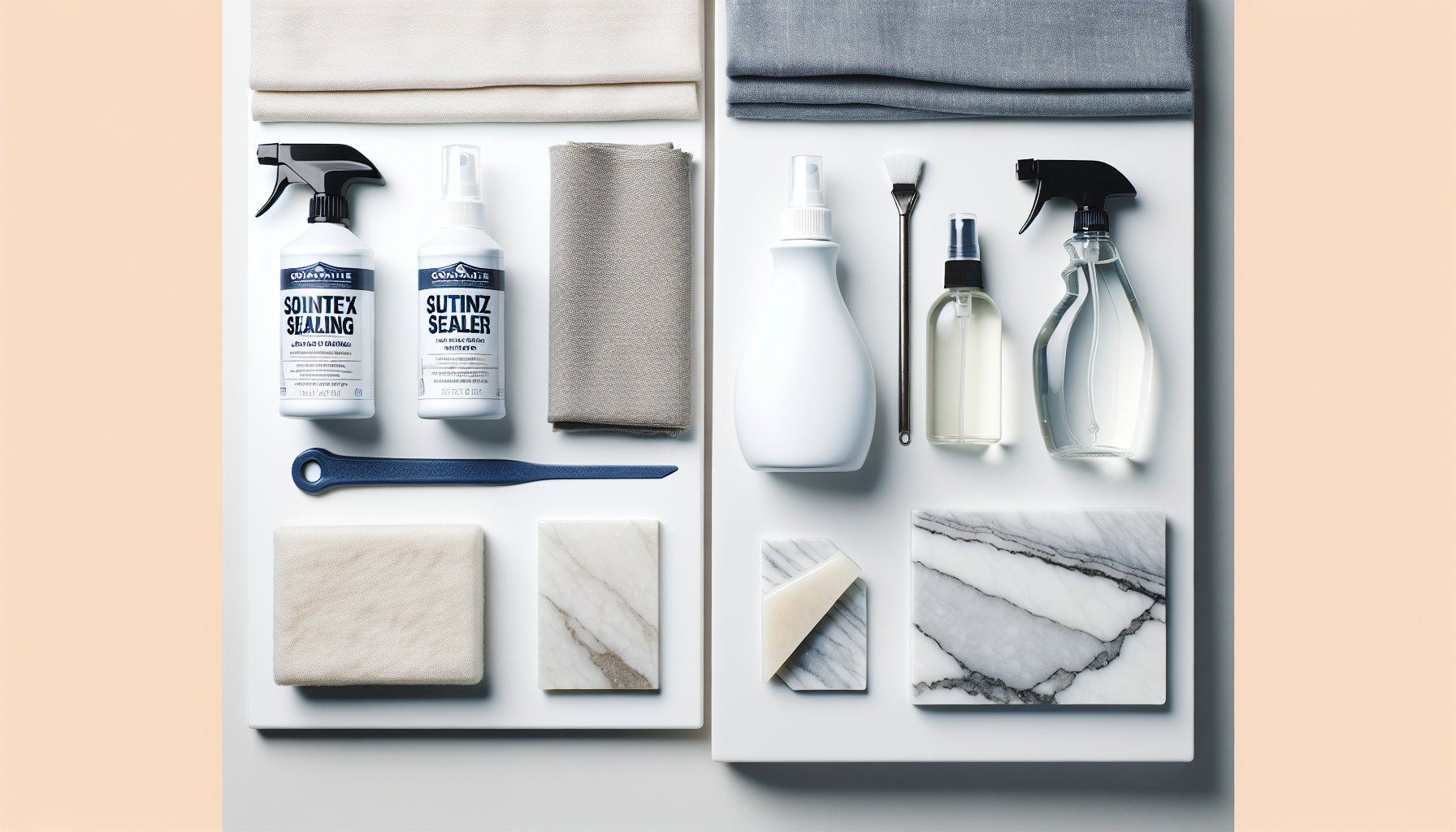
Left: quartzite sealing kit. Right: everything quartz needs. The maintenance gap is real.
Maintenance Requirements at a Glance
| Task | Quartzite | Quartz |
|---|---|---|
| Daily cleaning | pH-neutral dish soap + warm water | Mild dish soap + warm water |
| Spills | Wipe promptly (especially pigmented liquids) | Wipe when convenient |
| Weekly | Light clean with stone-safe cleaner | Routine wipe-down |
| Annual sealing | Yes: 30-60 mins, $25-60 DIY | Never required |
| Seal test | Water bead test annually | Not needed |
| Avoid | Bleach, vinegar, lemon-based cleaners | Bleach, oven cleaner, alkaline products |
| Heat protection | Trivets recommended, not required | Trivets always required |
| Cutting | Do not use as cutting board | Do not use as cutting board |
| Professional service | Sealing every 2-3 years ($100-300) | Not routine |
How to Seal Quartzite: Step-by-Step
Sealing quartzite is a DIY task most homeowners can complete in under an hour. Use a penetrating sealer (not topical). Allow 24-48 hours before regular use.
Use a pH-neutral stone cleaner and allow the surface to dry completely (at least 30 minutes). Any moisture in the stone will prevent the sealer from penetrating properly.
Pour or spray the penetrating sealer onto the surface. Do not apply to a hot or warm surface. Work in sections if the kitchen is large.
Do not let the sealer dry on the surface. Keep the surface wet with sealer for the full penetration period. Add more sealer if any areas dry out.
After the penetration period, wipe off all excess sealer thoroughly. Any sealer left on the surface will dry as a hazy residue. Buff dry with a clean cloth.
For more porous quartzite varieties or heavily used areas, a second coat applied immediately after the first can improve protection. Follow the same process.
Keep the surface dry for at least 24 hours and avoid placing anything heavy on it. Full cure takes 48 hours. After that, normal use can resume.
Maintenance Cost Over 20 Years
| Time Period | Quartzite (DIY sealing) | Quartzite (Pro sealing) | Quartz |
|---|---|---|---|
| Annual cleaning products | $50 | $50 | $50 |
| Annual sealing cost | $50 (DIY) | $150 avg (every 3yr) | $0 |
| 5-year total | $500 | $700 | $250 |
| 10-year total | $1,000 | $1,400 | $500 |
| 20-year total | $2,000 | $2,800 | $1,000 |
| Plus: repair incidents | $100-400 | $100-400 | $50-300 |
Based on 50 sq ft standard kitchen. DIY sealing: $50/yr. Professional sealing: $200/session every 3 years. Cleaning products: $50/yr.
Quartz Countertop Care: The Short Version
Quartz is the low-maintenance countertop material by design. The factory-sealed, non-porous surface means you can largely ignore the elaborate care protocols that natural stone requires.
- Mild dish soap and warm water
- Diluted isopropyl alcohol (70%)
- Non-abrasive household cleaners
- Bar Keepers Friend (occasionally)
- Microfiber cloths
- Bleach or bleach-containing cleaners
- Oven cleaners and drain cleaners
- Acetone (nail polish remover)
- Turpentine or paint thinners
- Abrasive scouring pads
Quartz resin degrades above 300F. Cast-iron skillets from a hot burner can permanently damage the surface. A trivet habit eliminates this risk entirely.