Quartzite vs Quartz for Kitchens: Which Countertop Material Is Best?
Kitchens demand more from a countertop than any other room: daily heat exposure, food prep stains, heavy cleaning, and constant traffic. This guide covers the kitchen-specific requirements that general comparison pages overlook.
Kitchen-Specific Performance Requirements
| Kitchen Demand | Quartzite | Quartz |
|---|---|---|
| Hot pan placement | Safe (1,000F+ tolerance) | Risk (use trivets always) |
| Oil/grease spills | Good when sealed | Excellent (non-porous) |
| Red wine/juice | Rinse promptly if sealed | Excellent (non-porous) |
| Cutting (direct) | Do not cut directly | Do not cut directly |
| Heavy daily use | Excellent (geological hardness) | Excellent |
| Food prep | Good (hard surface) | Excellent (easy to sanitise) |
| Daily cleaning | pH-neutral soap + water | Any mild cleaner |
| Under-window location | Excellent (UV-stable) | Risk (may yellow) |
| Gas range adjacent | Excellent | Use heat barrier |
Kitchen Lifestyle Matrix
If your kitchen is like this, choose this:
The Avid Cook Kitchen
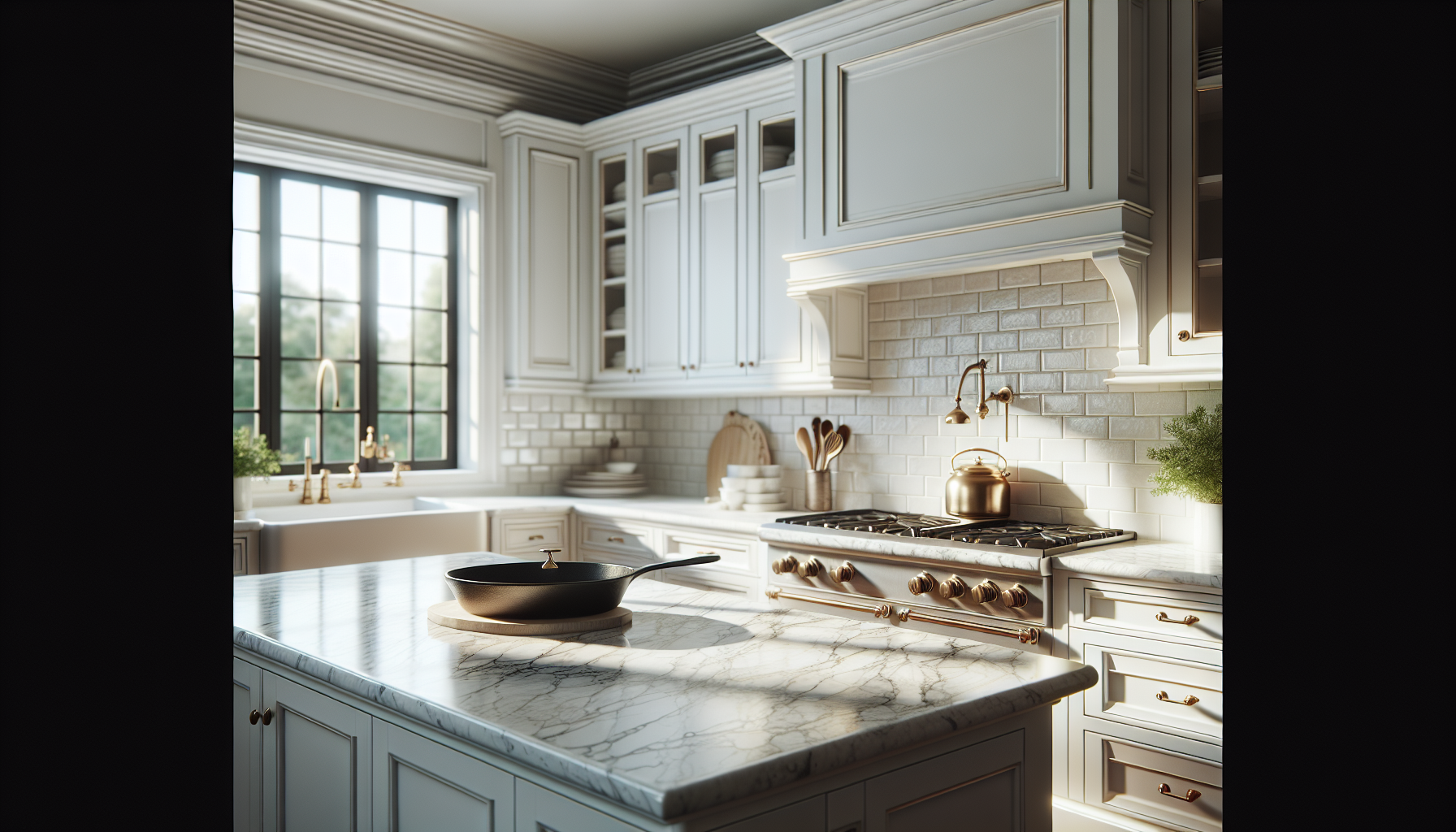
Daily cooking on a gas range, frequent hot pan placement, cast iron in regular use. Quartzite's heat tolerance is genuinely superior here. The sealing commitment is worth the performance.
The Family Hub Kitchen
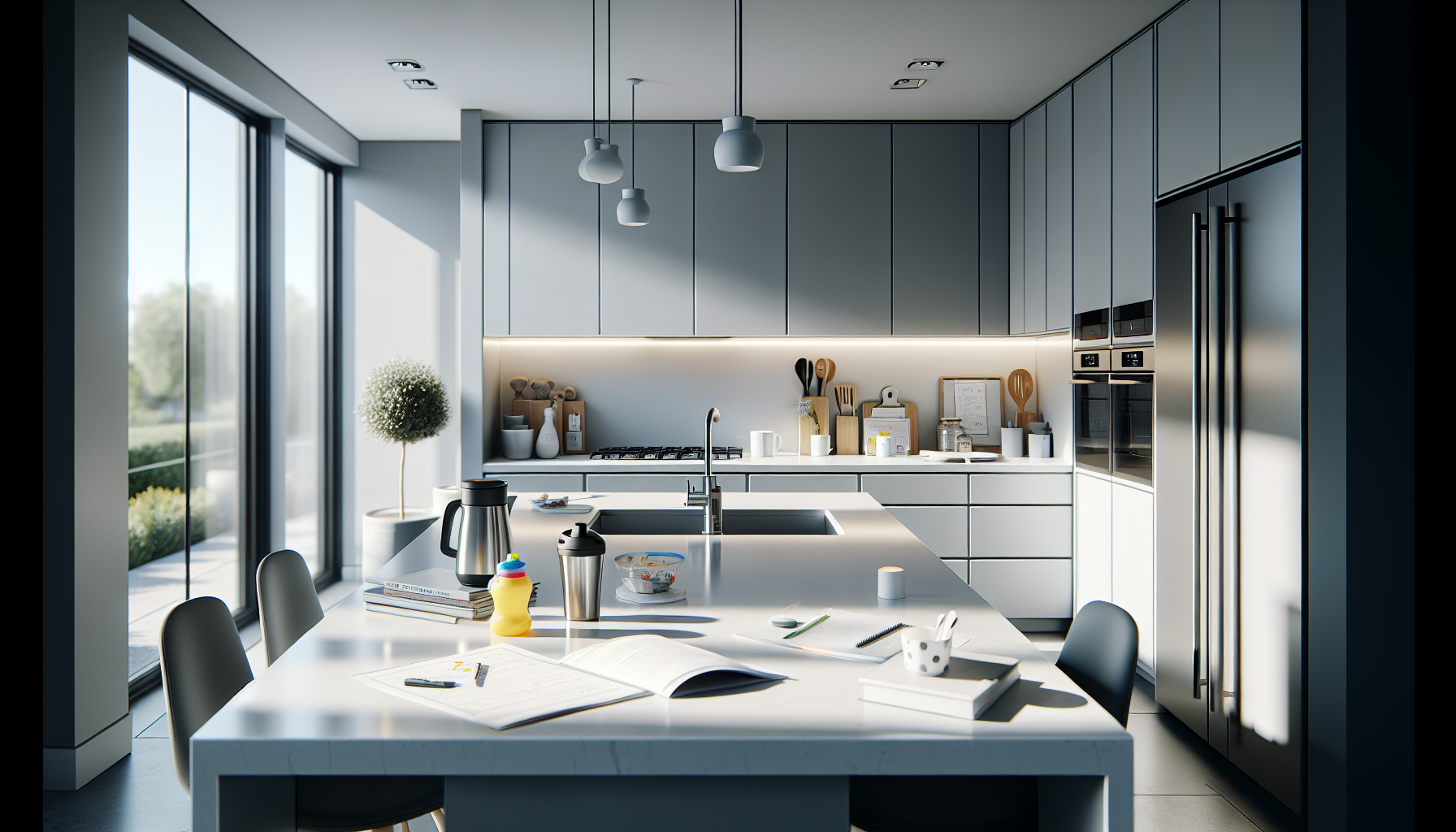
Homework, juice boxes, art projects. High spill frequency, inconsistent attention to maintenance. Quartz's forgiveness factor is substantial: spills that sit do not become permanent stains.
The Entertainment Kitchen
You host frequently and want the visual impact of natural stone for the island where guests gather, with practical quartz for prep areas. The two-material approach is designed for exactly this kitchen.
The Minimal Use Kitchen
Light cooking, mostly takeout, occasional use. Performance differences are largely irrelevant. Choose based purely on which material you find most beautiful.
The Two-Material Kitchen Approach
Using quartzite for the kitchen island and quartz for the perimeter counters is an increasingly popular design solution. It solves the performance trade-off elegantly: the island gets natural stone drama and heat tolerance, the perimeter gets low-maintenance practicality.
- Visual statement piece
- Hot pan placement area
- Leathered finish hides marks
- Natural stone conversation starter
- Daily prep and cleaning area
- Stain-resistant workhorse
- No sealing schedule
- Consistent, predictable colour
Cost consideration: two materials means two fabrication visits and potentially a cost premium. Typically adds $500-1,500 to project cost vs single-material installation.
Kitchen Countertop Cost Scenarios
Based on 40 sq ft perimeter + 15 sq ft island (55 sq ft total). 2026 pricing.
| Scenario | Total Estimate | Notes |
|---|---|---|
| Budget quartz (Silestone entry) | $4,000-5,500 | Strong value, good quality |
| Mid-range quartz (Caesarstone) | $5,500-8,000 | Most popular tier |
| Premium quartz (Cambria) | $7,000-10,500 | Top brand, American-made |
| Budget quartzite (Sea Pearl) | $5,500-8,000 | Natural stone at accessible price |
| Mid quartzite (White Macaubas) | $7,500-11,000 | Marble-look natural stone |
| Premium quartzite (Taj Mahal) | $9,000-13,500 | Luxury positioning |
| Two-material (Quartz + Taj Mahal island) | $9,000-14,000 | Best of both approaches |
Includes material, fabrication, and standard installation. Excludes removal, edge upgrades, and backsplash. See full cost breakdown.